

A sheet of material trying to leave the site is a fairly late invitation to discuss the wind.
The useful conversation happens earlier, while there is time to review the work, secure the site appropriately and agree what will happen if conditions change. “We will keep an eye on it” needs a person, a method and a decision behind it.
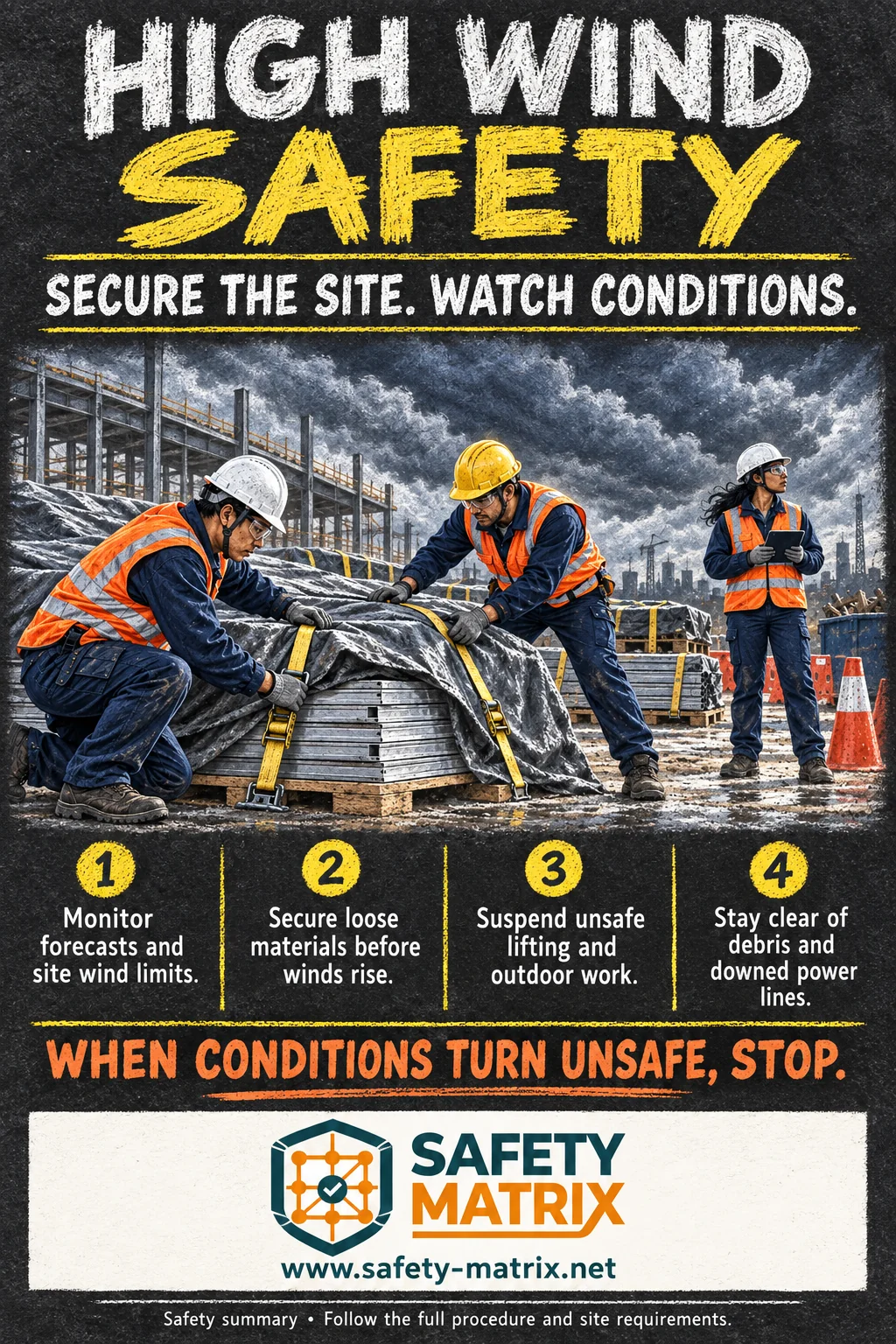
Our high-wind poster asks crews to monitor conditions, secure loose materials, suspend unsafe work and stay clear of debris and downed lines. The management challenge is making those actions part of the plan before the weather becomes the meeting chair.
Decide what information matters for the task
A general forecast helps with planning. The equipment instructions and site-specific assessment determine what is suitable for the work being proposed. A task involving a broad sheet of material is not interchangeable with a sheltered task elsewhere on the project.
CCOHS identifies moving objects, unstable loads, reduced visibility and damaged power lines among high-wind hazards. Its guidance calls for ongoing monitoring, attention to manufacturer wind limits and stopping work that has become unsafe. Read CCOHS: Weather — High Winds.
Avoid borrowing a single wind number from an unrelated job and treating it as a site-wide permission slip. Have the competent people responsible for each activity confirm the applicable limits and controls before work begins.
Give monitoring an owner
If everybody is keeping an eye on the weather, who is making sure a change reaches every affected crew? Shared awareness helps, but someone still needs to coordinate the response.
Agree who is monitoring the information required by the plan, how concerns are reported and who communicates changes to the work. Include subcontractors and people arriving after the morning briefing.
Think about a hypothetical site where one crew pauses an exposed task while another continues preparing related work nearby. Without a shared message, each crew may assume the other knows what has changed. A clear communication route helps bring the whole activity back under the same plan.
Prepare the site while preparation is straightforward
The poster’s reminder to secure loose materials is much easier to act on before conditions deteriorate. Build appropriate storage and securing arrangements into delivery and end-of-shift planning, using competent advice and the site’s requirements.
Ask what each trade is leaving behind and who checks shared areas. The last crew to leave should not inherit an unidentified collection of temporary arrangements without knowing who is responsible for them.
Do not turn a weather response into an improvised effort to chase or catch moving material. Keep clear of blown debris and damaged or downed power lines, and follow the site’s emergency arrangements. Technical securing decisions and emergency response belong with appropriately trained people.
Make stopping an organized decision
People are more likely to understand a pause when the expectations were explained before it happened. Discuss what information prompts review, who communicates the stop and what the crew should do under the approved plan.
Planning alternative suitable work can also remove some of the pressure to continue an activity whose conditions have changed. The alternative still needs its own assessment; “indoors” is not a complete work plan either.
Give restarting the same attention. A lull does not automatically resolve everything affected by the weather. The appropriate responsible people need to review conditions and confirm the work can resume under the applicable arrangements.
Before the weather changes, ask the crew
- Which activities have weather-related limits or additional controls?
- Who is monitoring the information those decisions require?
- How will every affected trade hear about a pause or change?
- Who is responsible for stored materials and shared areas?
- Who reviews the conditions before work resumes?
Specific answers make the plan easier to follow when the site becomes noisy and distracting. “Use common sense” leaves too much of the coordination unwritten.
Bring today’s conditions into the conversation
Safety Matrix helps teams prepare toolbox talks around their work and site conditions, with AI drafts reviewed and approved by people. Its controlled manual and hazard-report workflows support access to procedures and follow-up.
Your weather plan deserves to arrive before the gusts. Book a Safety Matrix demo and see how better preparation and clearer safety communication could fit your crew’s day.