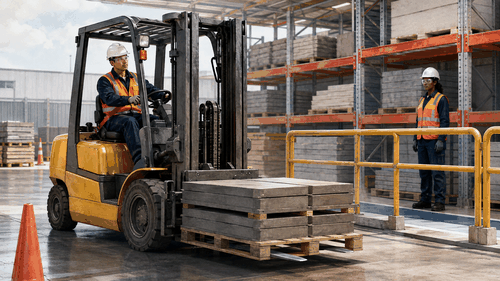
A forklift operator can be skilled, careful and fully trained. That still does not give them the ability to see through a stack of materials or predict where every visitor will walk.
Forklift safety is partly about the truck and the person operating it. It is also about the workplace everyone shares. When the entire traffic plan amounts to “watch out for the forklift,” the operator has been handed rather a large assignment.
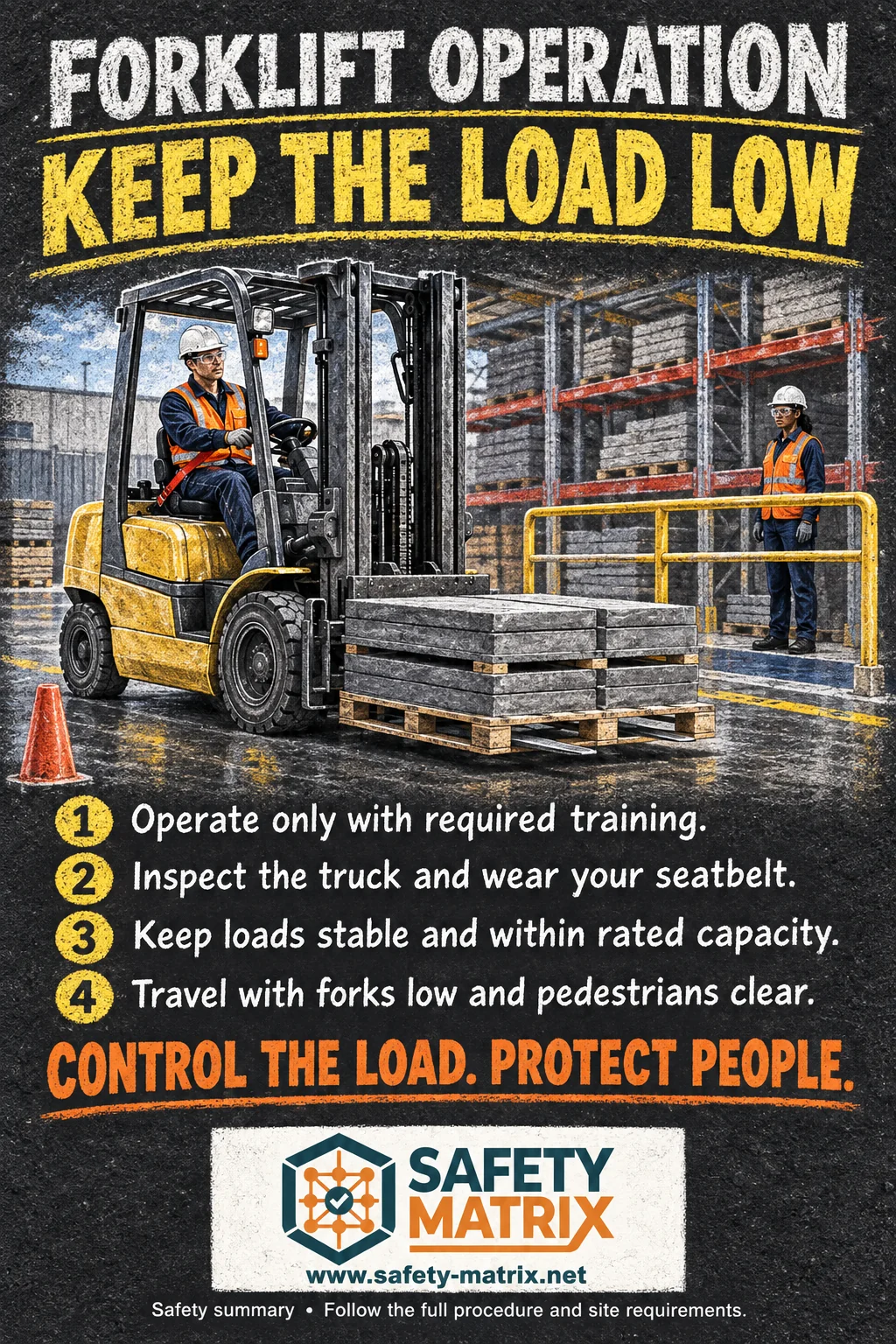
Our forklift poster reminds crews about training, inspections, load control and keeping pedestrians clear. A good site plan gives those expectations somewhere practical to work.
Invite the people who walk through the area
CCOHS recommends a written traffic-management plan informed by a hazard assessment and consultation with operators, workers and the safety committee or representative. Controls can include changing the layout, separating traffic and defining pedestrian and truck areas. Read CCOHS: Forklift Trucks — Traffic Management.
Start the conversation with the people who use the area for different reasons. The operator knows the delivery flow. The worker walking to a station knows which route is awkward. The receiving team knows when several arrivals compete for attention.
Those perspectives can reveal a planning problem that a warning sign alone cannot solve. Ask why people need to cross a route, whether a task can be arranged differently and who should review changes. The appropriate people can then assess and establish suitable controls.
The storage decision is also a traffic decision
Consider a hypothetical late delivery placed in the nearest available space. It may seem like a storage issue until it changes a walking route or obscures part of the area used by a forklift.
Have a defined route for reviewing those changes. “It is only there until tomorrow” describes duration, not suitability. The receiving supervisor should know where materials may go and whom to contact when the planned space is unavailable.
This is especially important when the site looks different from the layout discussed at orientation. Workers cannot follow a route that has quietly become a storage bay. Keep the approved arrangements visible and bring changed conditions to the responsible person’s attention.
Make the visitor’s first trip understandable
A person arriving for the first time does not have the local knowledge regular workers share. They may not know which door leads to the office, where to wait or which area is restricted.
Give delivery drivers, visitors and contractors clear arrival instructions and the relevant site briefing. Ask someone unfamiliar with the area to explain what those instructions tell them. If several interpretations sound reasonable, the message needs work.
CCOHS includes education for pedestrians, contractors and visitors in traffic management. It also recommends reviewing controls to check their effectiveness. That review should consider how the arrangements work during the busy part of the day, not just how they look when the area is empty.
Watch for the problem that keeps returning
If the same route becomes obstructed every afternoon, repeatedly moving the obstruction may leave the underlying planning problem untouched. Ask what activity produces it and what would prevent the conflict from recurring.
A near-miss report can help identify those patterns. Record the location and the circumstances clearly enough for someone to examine the arrangement. Avoid reducing every report to an instruction for the operator or pedestrian to be more careful.
Keep operator training, authorization, inspections and manufacturer requirements within the company’s forklift program. This discussion does not teach truck operation or replace the site traffic rules.
Take these questions on your next site walk
- Where do pedestrians need to go, and does the approved route remain usable?
- What happens when a delivery cannot use its planned storage area?
- How does a first-time visitor learn where to wait?
- Who reviews a change to the traffic arrangement?
- Which recurring concern deserves a planning change rather than another reminder?
Give the observation a clear destination
Safety Matrix brings hazard reports and corrective-action tracking together with reviewed company procedures. Your team can also prepare toolbox talks around the conditions and concerns being reported.
A good traffic plan deserves better support than a warning shouted across the yard. Talk to Safety Matrix about making reports, procedures and follow-up easier to connect across your operation.