
The load has no idea the delivery is late. It cannot appreciate the pressure on the schedule or reward a team for being nearly ready.
That makes lifting a useful reminder that urgency and readiness are different things. The best time to sort out missing information is before the operation becomes a public performance with several trades waiting for the result.
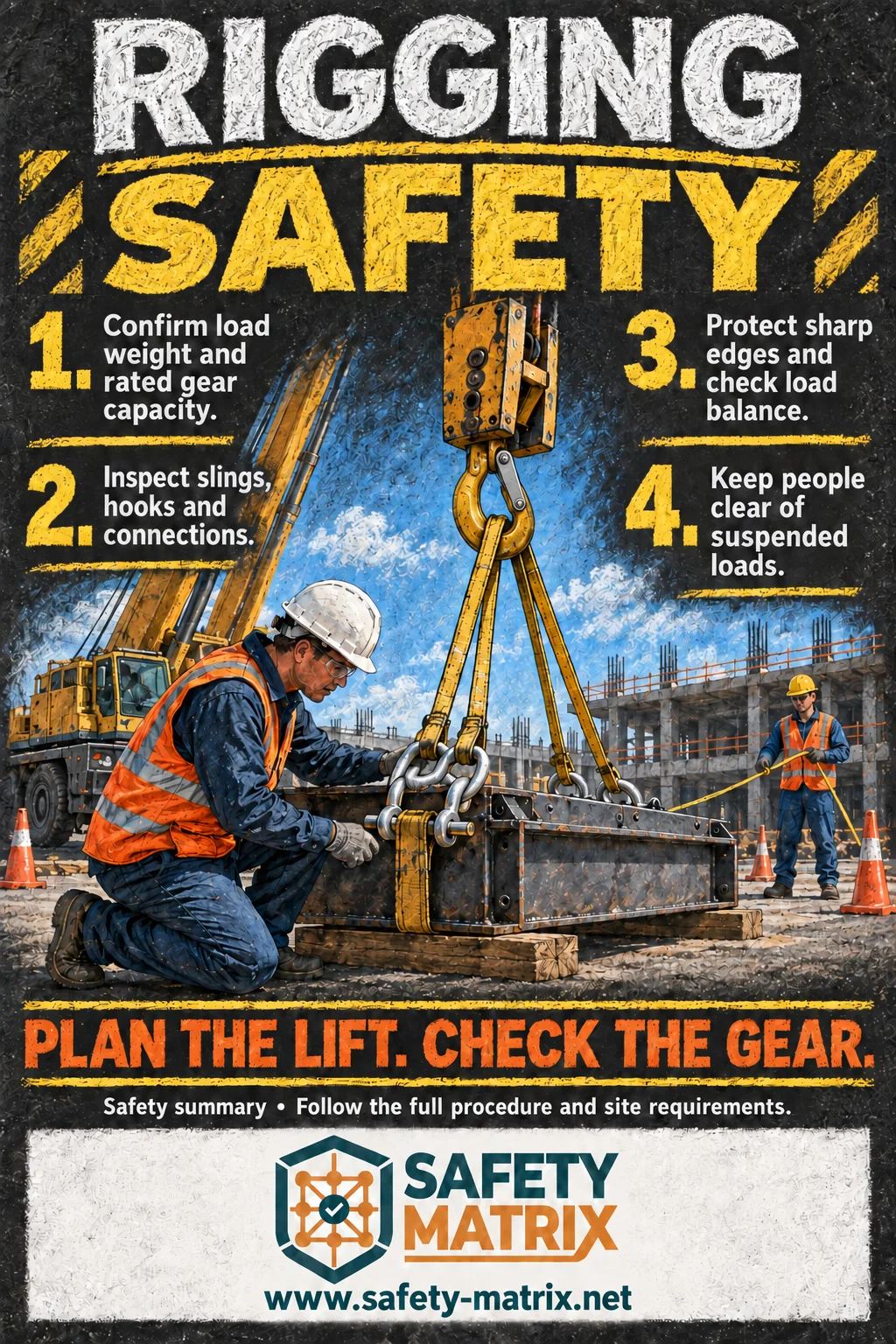
Our rigging poster highlights the load, rated gear, inspection and keeping people clear. Those reminders belong inside a lift planned and carried out by appropriately competent people, using the applicable procedures and equipment information.
A familiar-looking load still needs real information
“We lifted something like this last week” may be a helpful observation. It does not establish that today’s load, equipment, location or conditions are the same.
The people planning the lift need reliable information and the authority to resolve gaps. Management can help by making that information part of procurement and delivery coordination rather than a last-minute request from the crew.
CCOHS guidance for chain slings calls for competent inspection, suitable identification and reference to manufacturer capacity information. It also says to establish the load weight and avoid damaged gear. See CCOHS: Materials Handling — Chain Slings. Those technical decisions are for qualified personnel; this article offers no sling selection or rigging calculation method.
Name the responsibilities while everybody can still hear
A coordination meeting should make it clear who is planning, supervising and carrying out the lift, and how the surrounding work is being managed. Ambiguous responsibility is difficult to repair once several people believe somebody else made the decision.
The UK’s Health and Safety Executive stresses competent planning, suitable supervision and trained people in its lifting-operations guidance. Its legal discussion applies to its jurisdiction; the broader planning lesson is useful, while your own work must follow local requirements and the approved lift plan.
Ask each participating company to identify its role before the work arrives at the site. A rental booking, subcontract or delivery appointment should not be allowed to conceal an unresolved question about who is responsible for the plan.
A substitution is a decision, not a detail
Imagine a hypothetical delivery that differs from the one described during planning. Perhaps the supplier changed the packaging, or the intended destination is no longer available. The right response is to send the change back to the competent person responsible for review.
“Close enough” is not a documented decision. Make it normal for the crew to report a difference without being expected to work out a technical solution under schedule pressure.
The same principle applies to equipment concerns. A damaged or unidentified item should enter the established inspection and removal-from-service process. The person raising the concern should know who will respond and what happens to the planned work while it is resolved.
Keep people clear of suspended loads and respect the controlled area established for the operation. The planned communication arrangements should also reach other trades, visitors and delivery personnel who may not have attended the lift briefing.
Use the briefing to find disagreements
A useful meeting does more than produce nods. Invite people to explain the current plan and point out anything that no longer matches the site. A disagreement discovered in the briefing is a chance to improve the work before it starts.
- Does the available load information match what has actually arrived?
- Who is responsible for reviewing a change or unresolved concern?
- Have the participating contractors confirmed their assigned responsibilities?
- How will neighbouring trades understand the controlled work area?
- Where is the approved plan, and how will revisions reach the crew?
These questions support coordination. They do not replace the lift plan, inspection criteria, manufacturer instructions or competent supervision.
Keep decisions attached to the work
Safety Matrix supports controlled safety procedures, pre-job hazard assessments and hazard-report follow-through. Reviewed toolbox talks help bring the relevant discussion to the crew. The software does not design or approve a lift.
We believe the person raising a concern should be able to see where it goes next. Book a Safety Matrix demo and bring us the coordination problems your team is tired of solving twice. The schedule can wait for a sound decision; the paperwork should help people make it.